
Are we doing enough to keep our relationships thriving? This lively, research-backed guide blends humor with positive psychology to offer real communication strategies, science-based connection tips
As I was hiking the other day, I thought about the surprising structural wisdom hidden in every doorway, a metaphor for our relationships and what it reveals about the people we love.
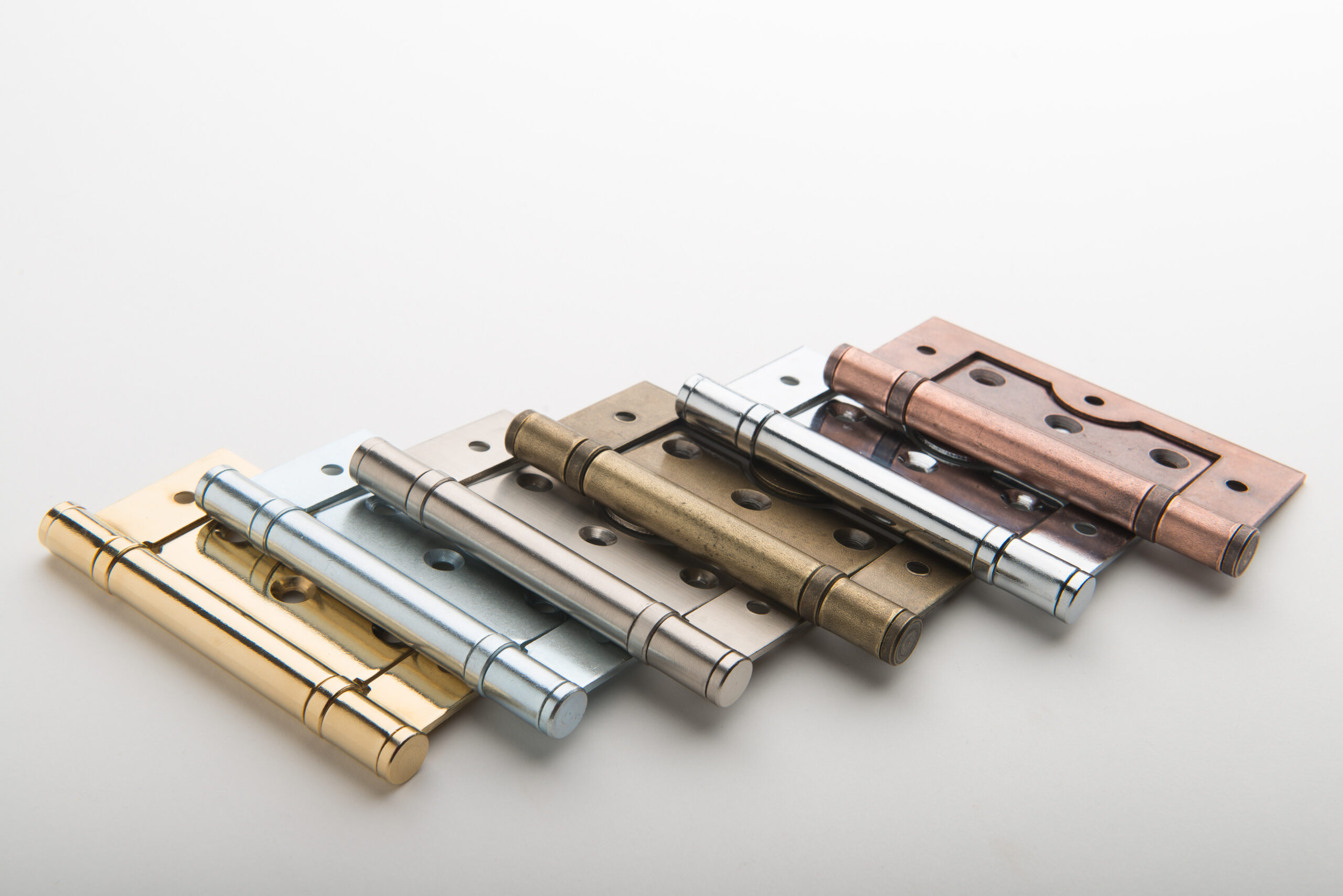
Then it dawned on me that our relationships operate much like door hinges.
Obviously, nobody falls in love with a hinge. We fall in love with the view through the open door—the light, the possibility, and the room we haven’t yet explored. But without that small, unglamorous piece of hardware holding everything together, we’re just standing in a hallway, pushing against a wall, and wondering why nothing is opening.
We are, each of us, a hinge leaf. Two separate pieces of formed metal—shaped by experience, tempered by circumstance, and drilled with our particular set of aligned holes—that must mesh precisely with another piece in order for the whole apparatus to function. Romance sells us on the door itself. Wisdom asks us to look at the hardware.
Consider what a well-made hinge actually does: it allows movement between two separate but joined parts while maintaining connection.
It holds tension without snapping. It permits the door—our shared life, our collaboration, our friendship, our community—to open outward into the world and close again with quiet security. It does this thousands of times without complaint. When it fails, the whole door becomes either stuck or uncontrollable. We have all, at some point, lived in a house with a bad hinge. We know the screech. We know the sag.
Hardware Matters (And We’ve Been Ignoring It)
We spend enormous energy on our software—our therapy sessions, our communication workshops, our conflict-resolution frameworks, our attachment-style deep dives. All of it is genuinely useful. But software runs on hardware, and if the hardware is compromised, the most elegant emotional intelligence app in the world will stall, crash, and take your relationship down with it.
The hardware is structural. It is the physical body carrying decades of unprocessed stress; the nervous system that learned, very early, whether the world was safe or not; the sleep we’re not getting; the grief we’ve been postponing with productivity; and the identity that never quite got to solidify before someone started needing things from it. Our hardware is the hinge material itself—and not all of it was cast in the same factory.
The door is the relationship we’re trying to build together. The frame—the doorframe—is the community, culture, and context that holds the whole structure plumb and level. A beautifully matched pair of hinged leaves, installed in a warped frame, will still bind. This is not a personal failing. It is a structural one. And structural problems require structural thinking.
Conscious Coupling: Choosing to Mesh
The phrase “conscious coupling” has been overused by popular culture, but strip away the celebrity noise, and the idea underneath is genuinely important: the deliberate, informed, ongoing choice to build a shared life with another person. Not the falling for another blinded by love lights—anyone can fall. The staying, the choosing, the continual re-choosing. That’s the work of the hinge.
Conscious coupling begins with a radical act of self-inventory. Before we can mesh well with another leaf, we need to know our own material—where we are rigid, where we flex, where we have been weakened, and where our load-bearing capacity genuinely lies. This is not navel-gazing; it is engineering. You would not install a corroded hinge on a door you care about. Why accept less of yourself?
What conscious coupling looks like in practice: naming what we need before resentment names it for us.
Conscious coupling means that we bring our curiosity to our partner’s behavior before we bring a verdict, understanding that our nervous system’s threat response is a hardware feature, not a character flaw, and self-regulating without making a mess. It means knowing the difference between a difficult partner and a warped frame and having the honesty to address both.
Relationship Maintenance: The Scheduled Oil Change
We accept, without complaint, that cars need oil changes, roofs need inspections, and teeth need cleaning. We have built entire industries around maintaining physical infrastructure. And yet we routinely expect our most important relationships—the ones carrying the greatest emotional load—to operate indefinitely without intentional upkeep. This is not optimism. It is magical thinking with a very predictable failure rate.
Relationship maintenance is not a sign that something is wrong. It is the evidence that something is right—that we value the structure enough to tend to it. Research from the Gottman Institute consistently shows that the distinguishing factor in long-term relationship health is not the absence of conflict but the presence of what Dr. John Gottman calls “turning toward” behaviors: small, consistent acts of attention, interest, and care that function exactly like oil on a hinge pin.
A practical maintenance framework includes four regular practices:
- State-of-the-union conversations—monthly check-ins that ask not just ‘How are we doing?’ but ‘What is our structure carrying right now, and is it load-appropriate?’
- Repair rituals—agreed-upon protocols for de-escalation after friction so that metal fatigue doesn’t accumulate into structural failure.
- Joy investments—deliberate, protected time for play, humor, and pleasure. Joy is not a reward for successful maintenance. It is part of the maintenance itself.
- Gratitude practice—the daily, specific naming of what the other person brings to the shared door. Appreciation is the anti-corrosive agent.
None of this is complex. All of it requires intention. The difference between a well-maintained hinge and a neglected one is not talent or luck. It is the decision to show up with the maintenance tools and the oil can.
Partner Communication: Speaking in a Language the Hardware Can Hear
We have a communication problem in our relationships, but it is almost never the problem we think it is. We assume the failure is in the words—that if we could just find the right phrase, the right moment, the right tone, the message would land. But communication breakdowns are more often hardware failures than software failures. When someone’s nervous system is in threat response, the most eloquent “I” statement in the world will not reach them. The hardware has to be online first.
Effective partner communication requires three conditions that have nothing to do with vocabulary:
1. Physiological readiness. Both nervous systems need to be out of threat response before any meaningful exchange can occur. Sometimes going to bed is exactly the right intervention. Sleep resets the hardware. The conversation in the morning is a different one.
2. Structural clarity. Before speaking, we need to know which room we’re trying to open. Unnamed needs disguise themselves as criticism, which activates the other person’s hardware and guarantees the conversation will not go where we want it to.
3. Repair as a first-class skill. The goal of partner communication is not to never cause friction. The goal is to repair quickly and without shame when friction happens. Dr. Sue Johnson’s Emotionally Focused Therapy reminds us that the question underneath most conflict is simply: ‘Are you there for me?’ When repair is swift and genuine, the answer stays yes.
Mesh Well, or Grind Slowly
Here is the operative word: mesh. The knuckles of a hinge—those cylindrical loops that interlace around the pin—must align. When they do, the motion is smooth, nearly silent, and seemingly effortless. When they don’t, you get friction, wobble, and eventually, metal fatigue. We have a name for metal fatigue in relationships: resentment.
Meshing well doesn’t mean being identical. Identical hinge leaves would cancel each other out—two flat pieces of metal fused at the center, immovable. What we need is complementary design: one leaf mortised into the door and one into the frame, each performing its distinct role, united at the pin. The pin, for those keeping score at home, is trust. Lose it and the whole thing falls off the wall.
Our software—emotional intelligence, social fluency, empathy, and the ability to take a breath before sending that surly text—tells us how to mesh. Our hardware determines whether we can. When we’re running on depleted hardware, even the most socially intelligent among us will strip our own screws. We will say things we mean, but not in the way we meant them. We will confuse the door for the frame, the frame for our partner, and our partner for the unresolved business of our past.
This is not a reason to despair. It is a reason to do maintenance. Even the finest architectural hardware requires occasional attention—a little oil on the pin, a tightened screw, a check to ensure the door still hangs true. We call this, in human terms, intentional practice. Therapy. Rest. Honest conversation. Community. Joy.
The house we are collectively building—the one we live in together as partners, families, neighbors, and citizens—is only as strong as its smallest, least glamorous piece of hardware. Let’s stop ignoring the hinges.
Like what you’re reading? Want more consciously prepared brain food?
Listen to this Harvesting Happiness episode: Conscious Coupling: Relationship Maintenance Tune-Up with Raffi Bilek, LCSW-C or wherever you get your podcasts.sode: Diversity as a Joy Practice: The Power of Inclusive Leadership with S. Leigh Thompson or wherever you get your podcasts.
Resources for Further Exploration:
- Mating in Captivity by Esther Perel: A frank examination of the tension between security and desire in long-term partnership.
- Attached by Amir Levine & Rachel Heller: The accessible guide to adult attachment theory. Helps readers identify their own “hinge material.
- What Makes Love Last? By John Gottman: Gottman’s research on trust and betrayal—the science behind why the pin is the load-bearing element of every relationship.
- The Couples Communication Handbook: The Skills You Never Learned for the Marriage You Always Wanted by Raffi Bilek: Clear and practical instructions on how to communicate effectively with your partner to ensure they feel heard.
Like what you’re reading? Want more consciously prepared brain food?
Enjoying this theme? Be sure to also check out Real Talk: How to Keep Your Relationship Thriving with Raffi Bilek, LCSW-C or wherever you get your podcasts.https://open.spotify.com/embed/episode/5rzhMg4OvK4yxkEgp95w3m
Get “More Mental Fitness” bonus content by Harvesting Happiness on Substack and Medium.
Meet Our Guest:
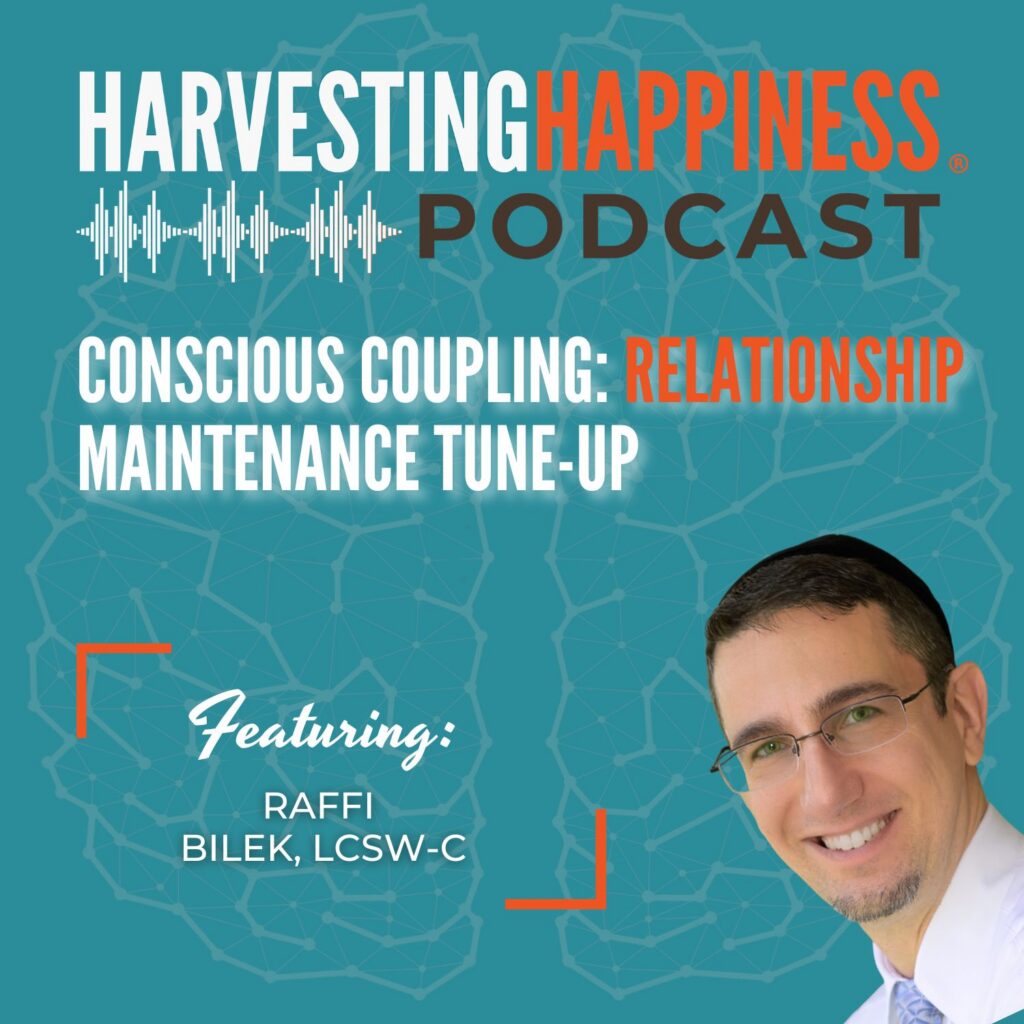
Raffi Bilek, LCSW-C, is a therapist working with couples around the world to help them shore up their relationships and get their communication dialed in. He is the author of The Couples Communication Handbook: The Skills You Never Learned for the Marriage You Always Wanted and the father of four lovely girls who give him a run for his money.
Book: The Couples Communication Handbook: The Skills You Never Learned for the Marriage You Always Wanted
Keep Reading:

Lisa Cypers Kamen is a lifestyle management consultant who explores the art and science of happiness in her work as a speaker, author, and happiness expert. Through her globally syndicated positive psychology podcast, books, media appearances, and documentary film, Kamen has impacted millions of people around the world.
About The Author
learn more
browse services