

I am a woman of a certain age entering her “wisdom” years. Gratefully, I am the parent of two thriving young adults. At the same time, I also feel quite sandwiched and saddled with responsibilities as the eldest daughter of aging parents and other extended family members. These days, between work and caregiving, I feel like there is not much of me left to go around.
Many people rely on me for clear-headed thinking and problem-solving. I enjoy the process. Being the one who consistently shows up and completes tasks can also carries a downside. This approach has led me to burnout and feelings of being undervalued.
My performance overload experience has made me aware of a caregiving crisis that most of us are not talking about openly. More than 53 million Americans currently provide unpaid care to family members or friends, yet the emotional toll of this labor remains largely invisible in our cultural conversations. Dr. Laura Mauldin’s groundbreaking book In Sickness and In Health: Love Stories from the Front Lines of America’s Caregiving Crisis illuminates what so many of us experience but rarely name: compassion fatigue.
I am lucky to have hosted her on the Harvesting Happiness podcast and learn from her research and lived experiences.
Here’s what we need to understand: each of us will likely find ourselves on both sides of this equation at different points in our lives. We will be caregivers. We will be care recipients. The boundary between these roles is more fluid than we often acknowledge, and our collective denial of this reality keeps us unprepared for the challenges ahead.
Unlike simple tiredness, compassion fatigue represents a profound depletion of emotional resources that occurs when we consistently prioritize others’ needs above our own. For those of us managing chronic illness, disability, or aging loved ones, this exhaustion isn’t a personal failing—it’s a predictable outcome of a system that offers inadequate support to all of us.
The statistics tell only part of our story. Behind these numbers are our mothers and daughters, our partners and friends, our neighbors and colleagues—all navigating the confusing terrain of care without adequate maps or resources. We’re doing our best with insufficient support, and it’s time we acknowledged this collective struggle.
What Is Compassion Fatigue in Caregiving?
Compassion fatigue differs from standard caregiver burnout in important ways that we all need to recognize. While burnout typically involves physical and emotional exhaustion from prolonged stress, compassion fatigue specifically describes the diminished capacity to empathize that emerges from continuous exposure to others’ suffering.
This isn’t abstract clinical language—it’s describing what many of us experience but struggle to name. We find ourselves feeling numb when we should feel connected. We notice irritability creeping into our most cherished relationships. We recognize ourselves becoming the people we never thought we’d be.
Signs of Compassion Fatigue We Might Recognize:
- Emotional numbness or detachment from our loved one’s experiences
- Irritability, resentment, or guilt about our caregiving responsibilities
- Physical symptoms we can’t ignore: headaches, digestive issues, chronic fatigue
- Difficulty sleeping or persistent anxiety that follows us through our days
- Loss of interest in activities we once enjoyed and looked forward to
- Feelings of helplessness or hopelessness about our situations
- Increased reliance on substances or unhealthy coping mechanisms we know aren’t serving us
Healthcare professionals have long recognized compassion fatigue as an occupational hazard in their field, but those of us providing family care often face it without professional training, adequate breaks, or institutional support. We’re learning on the job, often in crisis mode, and the result is an unspoken epidemic of caregiver mental health struggles hidden behind our closed doors and brave faces.
We tell ourselves we should be stronger, more patient, more capable. We compare ourselves to idealized versions of caregiving we see in the media or imagine our grandparents embodied. But this self-judgment only deepens our isolation and exhaustion.
The Ableism Factor: How Systemic Barriers Compound Our Collective Stress
One crucial dimension that Dr. Mauldin’s work addresses—and that we must confront together—is how ableism intensifies the burden we all carry. Ableism, the discrimination and social prejudice against people with disabilities, affects all of us, whether we currently identify as disabled or not. When our society views disability primarily through a lens of tragedy or inconvenience rather than as natural human diversity, we face additional layers of stress that compound our caregiving challenges.
This matters because disability is not an “other people” problem. It’s part of the human experience that most of us will encounter directly—either in ourselves or in those we love. Our collective failure to create truly accessible, inclusive systems means we’re all operating with one hand tied behind our backs.
How Ableism Increases Our Caregiver Exhaustion:
- Insufficient accessibility: In our public spaces, transportation systems, and services necessitate constant advocacy, planning, and problem-solving. Simple errands become complex logistical challenges. What should be routine becomes an extraordinary effort.
- Medical system gatekeeping: Fighting for appropriate care, accommodations, or benefits drains the emotional energy we need for actual caregiving. We spend hours on hold, navigating bureaucracy, justifying needs that should be obvious, and advocating for basic dignity and respect.
- Social isolation: Ableist attitudes often exclude both disabled individuals and their caregivers from community participation, severing the vital support networks we all need. Invitations stop coming. Friendships fade. We find ourselves increasingly alone.
- Internalized shame: Cultural messages about disability create guilt or embarrassment that can prevent us from seeking help or acknowledging our struggles. We absorb the message that needing support is weakness, that asking for help is a burden, and that our struggles are private failures rather than systemic problems.
Recognizing these systemic issues isn’t about placing blame—it’s about understanding that caregiver burnout often stems from structural failures that affect all of us, not from our individual inadequacies. When we understand this, we can begin to advocate for the changes we collectively need.
The Unspoken Truth We Must Share: Acknowledging Caregiving’s Emotional Labor
Part of what makes compassion fatigue so damaging is the silence we maintain around it. As caregivers, many of us feel we cannot admit exhaustion, resentment, or the desire for respite without seeming selfish or unloving. We police our feelings, suppressing the very emotions that need acknowledgment and processing.
This emotional suppression creates what researchers call secondary traumatic stress—a condition similar to PTSD that develops from indirect exposure to trauma. We’re experiencing real psychological injury, but we’re often doing so in isolation, convinced that if we were better people or stronger caregivers, we wouldn’t struggle this way.
Dr. Mauldin’s research reveals something we all need to hear: we need permission to acknowledge the full complexity of our experiences.
- Love and exhaustion can coexist.
- Commitment and the need for boundaries aren’t mutually exclusive.
- Devotion and resentment can occupy the same heart at the same time.
Recognizing this truth is our first collective step toward compassion fatigue recovery. We need to create spaces where we can say, “I love this person deeply, and I’m also drowning.” Both truths can exist simultaneously. Our capacity to hold complexity, to acknowledge difficulty without abandoning commitment, is actually a sign of emotional maturity—not weakness.
Practical Self-Care Strategies for Our Collective Resilience
Addressing compassion fatigue requires more than individual bubble baths and meditation apps—though these can certainly help. Sustainable caregiver self-care must include both immediate coping strategies and systemic changes that benefit all of us. We need solutions that work at the personal level while we simultaneously advocate for the structural changes our communities require.
The self-care industrial complex often sells us the message that if we just practice enough gratitude or take enough baths, our systemic problems will disappear. That’s not true, and we need to reject that narrative while still embracing the personal practices that genuinely support our well-being.
Immediate Self-Care Practices We Can Implement Today:
1. Establish Micro-Breaks Throughout Our Days: Even five-minute intervals of stepping outside, practicing deep breathing, or listening to music can interrupt the stress response cycle we’re trapped in. We don’t need hour-long spa sessions—we need consistent, brief moments of recovery throughout our demanding days.
2. Set Realistic Boundaries Without Guilt: We don’t have to do everything. Part of our work is identifying tasks others could handle and practicing saying no to non-essential demands. This isn’t selfishness—it’s sustainability. We’re in this for the long haul, and that requires pacing ourselves.
3. Maintain Physical Health Basics: We must prioritize sleep, nutrition, and movement even when—especially when—these feel impossible. Physical depletion accelerates our emotional exhaustion in ways that make everything harder. Our bodies aren’t optional equipment; they’re the only ones we have.
4. Create Emotional Outlets That Work For Us: Journaling, talking with trusted friends, or engaging in creative expression helps us process complex feelings without judgment. We need spaces where we can be messy, honest, and human—where we don’t have to perform strength or serenity we don’t feel.
5. Practice Self-Compassion Daily: We must treat ourselves with the same kindness we extend to our loved ones. When we notice ourselves spiraling into self-criticism, we can pause and ask: “Would I speak this way to a friend in my situation?” The answer is almost always no—so why do we accept this internal dialogue?
Systemic Support Solutions We Can Pursue Together:
Seek Professional Support Without Stigma: Therapy specifically addressing caregiver mental health can provide coping strategies and emotional processing space that we desperately need. Many therapists now specialize in caregiver issues and understand our unique challenges. We deserve this support, and seeking it is wisdom, not weakness.
Join Caregiver Support Groups: Connecting with others who understand our experience reduces the isolation that compounds our struggles and provides practical wisdom that books can’t teach. Both in-person and online communities exist, and finding our people can be transformative.
Utilize Respite Care Services: Regular breaks aren’t luxuries—they’re necessities for sustainable caregiving. We need to explore adult day programs, in-home respite workers, or temporary residential care options. Taking breaks doesn’t mean we love our people less; it means we love ourselves enough to prevent complete depletion.
Advocate for Policy Changes Together: Supporting legislation that expands family caregiver support services, paid family leave, and disability rights advances the systemic solutions we all need. Our individual self-care won’t solve structural problems, but our collective advocacy can create the systems that support all of us.
Demand Workplace Flexibility: If we’re employed while caregiving, we should explore FMLA benefits, flexible schedules, or remote work options. Many employers are becoming more accommodating, but we need to ask for what we need. Our silence protects systems that don’t serve us.
Moving Forward Together: From Crisis to Collective Compassion
Our caregiving crisis won’t be solved by individual self-care alone, but our personal resilience practices combined with collective advocacy can create meaningful change. By naming compassion fatigue together, challenging ableist systems as a community, and demanding better support structures for everyone, we can transform our stories from silent suffering to empowered advocacy.
Dr. Mauldin’s work reminds us that caregiving is fundamentally about love—but love doesn’t require self-destruction. Sustainable caregiving means building systems that honor both the cared-for and the caregiver, recognizing that disability justice and caregiver wellness are inseparably linked in our shared future.
We need to shift our cultural narrative from individual heroism to collective responsibility. The archetype of the tireless, endlessly patient, self-sacrificing caregiver serves no one—not the caregivers burning out in isolation, not the care recipients who sense our resentment and exhaustion, not the communities that could be offering support but don’t know it’s needed.
If we’re experiencing caregiver exhaustion right now, we need to know that our struggle is valid, our feelings are normal, and support exists. The first act of care might be extending compassion to ourselves. The second act might be reaching out to another caregiver who needs to know they’re not alone.
We’re all on this journey together—sometimes as caregivers, sometimes as care recipients, often as both simultaneously in different relationships. Our collective survival depends on building systems that support everyone, recognizing that today’s care recipient is tomorrow’s caregiver, and vice versa. This isn’t someone else’s problem to solve. It’s ours, together.
Resources for Further Exploration:
Books That Understand Our Experience:
- In Sickness and In Health by Laura Mauldin
- The Caregiving Years by Denise M. Brown
- When Breath Becomes Air by Paul Kalanithi
- Care Work: Dreaming Disability Justice by Leah Lakshmi Piepzna-Samarasinha
- The Unseen: Disability, Isolation, and Survival by Elsa Sjunneson
Crisis Support When We Need It:
- National Suicide Prevention Lifeline: 988
- SAMHSA National Helpline: 1-800-662-4357
- Crisis Text Line: Text HOME to 741741
Like what you’re reading? Want more consciously prepared brain food?
Listen to this Harvesting Happiness episode, In Sickness and In Health: Exploring America’s Caregiving Crisis with Dr. Laura Mauldin, PhD or wherever you get your podcasts.
Get “More Mental Fitness” bonus content by Harvesting Happiness on Substack and Medium.
Meet Our Guest:
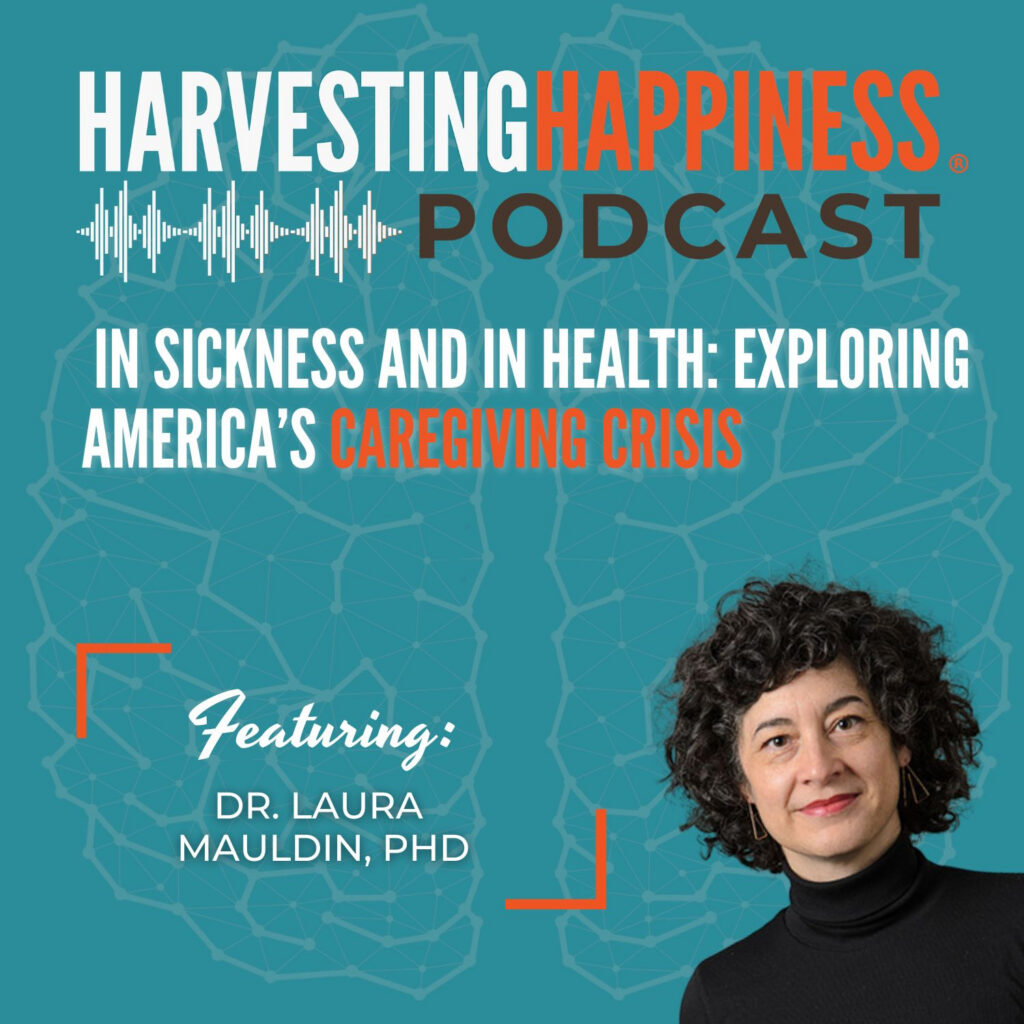
Laura Mauldin, PhD, is an associate professor in the Department of Social and Critical Inquiry at the University of Connecticut. In 2024, she was named a New America National Fellow, and her writing has appeared in the Los Angeles Review of Books, The Baffler, and The American Prospect, among other outlets.
Laura is a nationally certified sign language interpreter and maintains the website Disability at Home, which highlights the ingenuity of disabled people and caregivers who share advice on making homes accessible. She lives with her family in New York.
Book: In Sickness and In Health: Exploring America’s Caregiving Crisis with Dr. Laura Mauldin, PhD
Keep Reading:

Lisa Cypers Kamen is a lifestyle management consultant who explores the art and science of happiness in her work as a speaker, author, and happiness expert. Through her globally syndicated positive psychology podcast, books, media appearances, and documentary film, Kamen has impacted millions of people around the world.
About The Author
learn more
browse services