
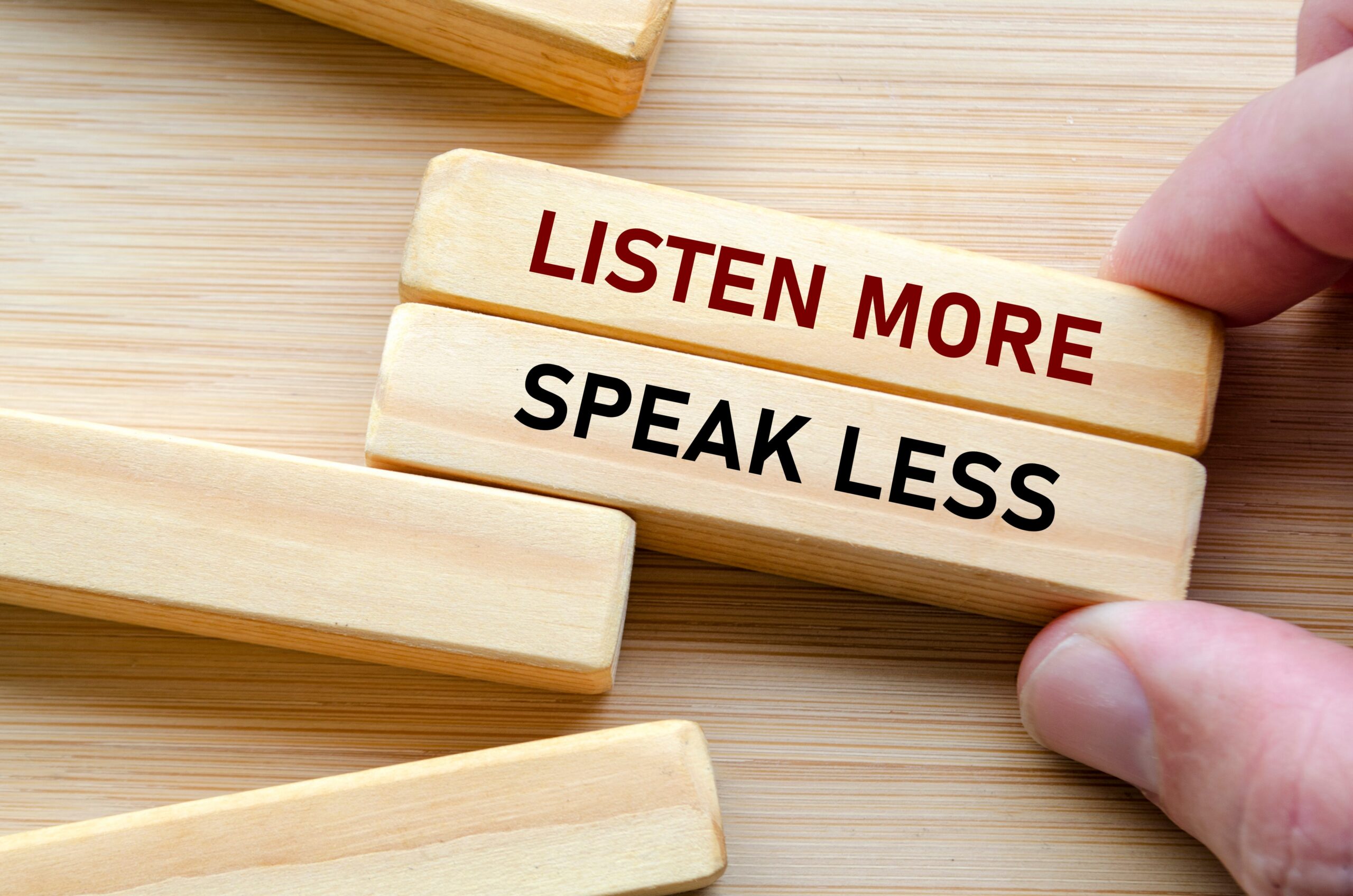
We’ve all encountered them: the relentless talkers who dominate every conversation, oblivious to the glazed eyes and shifting feet around them. They steamroll through meetings, monopolize dinner parties, and turn simple discussions into exhausting monologues. Meanwhile, the rest of us wait for a pause that never comes, our thoughts unheard, our contributions dismissed before we can voice them. This isn’t just annoying—it’s destructive. These communication chaos-makers kindle crises, foment misunderstandings, and leave relationships damaged in their wake.
The irony? These big talkers believe they’re demonstrating expertise and confidence. In reality, they’re revealing their most significant weakness: an inability to listen. And in doing so, they’re missing the most powerful tool we have for building relationships, solving problems, and navigating the complexities of human interaction.
Understanding Communication Styles
Before we explore how to listen better, let’s acknowledge that we all communicate differently. Communication researchers typically identify several primary styles:
Assertive communicators express their needs clearly while respecting others—the gold standard we should aim for. Passive communicators avoid conflict and rarely voice their opinions, often building resentment over time. Aggressive communicators dominate conversations, prioritize their own needs, and steamroll over others’ boundaries. Passive-aggressive communicators express hostility indirectly, through sarcasm or subtle sabotage.
Then there’s a particularly toxic subcategory we might call the chronic bloviators—those who combine aggressive communication with profound self-absorption. These individuals don’t just talk; they perform, lecture, and pontificate, completely tone-deaf to social cues that signal disinterest or discomfort.
Consider Marcus, a mid-level manager who turns every team meeting into his personal TED Talk. While his colleagues need to discuss urgent project deadlines, Marcus launches into lengthy stories about his weekend adventures, his opinions on company strategy (unsolicited), and detailed explanations of concepts everyone already understands. His team has learned to build extra time into meetings to accommodate his tangents. Projects fall behind. Resentment builds. Eventually, talented team members request transfers, citing “communication issues” in exit interviews.
Or think about Janet, who calls her adult daughter three times daily, each conversation lasting over an hour. Janet talks about her health concerns, her neighbors’ drama, her thoughts on current events—barely pausing for breath. When her daughter tries to share her own struggles with work stress or parenting challenges, Janet immediately redirects: “That reminds me of when I…” Her daughter has stopped trying to share meaningful updates, and their relationship has become transactional rather than connected.
These aren’t isolated examples. We all know someone like this. We might occasionally be someone like this.
Why Listening Is Intelligent Communication
Here’s what research in communication skills consistently demonstrates: the most effective communicators are exceptional listeners. This isn’t just folk wisdom—it’s backed by decades of psychological and organizational research.
When we truly listen, we gather crucial information that informs better responses. We understand not just the words being spoken, but the emotions, concerns, and needs beneath them. We build trust, because people feel valued when heard. We avoid misunderstandings that spawn from assumptions rather than understanding. We create space for collaborative problem-solving rather than competitive monologuing.
Intelligent communication recognizes that conversation is jazz, not a solo performance. It requires reading the room, adjusting our contribution based on others’ engagement, and understanding that sometimes the most powerful thing we can say is nothing at all.
The big talkers miss all of this. They’re so focused on their next point that they don’t notice the subtle frown indicating disagreement, the checked watch signaling time pressure, or the interrupted sentence revealing someone else had something important to contribute. They mistake verbosity for value and airtime for authority.
The consequences ripple outward. In professional settings, these communication disasters derail meetings, waste collective time, and suppress diverse perspectives that could lead to innovation. In families, they create distance and resentment as quieter members feel perpetually unheard. In friendships, they lead to gradual ghosting as people find excuses to avoid the exhaustion of one-sided interaction.
The Path to Better Listening
Becoming a better listener isn’t passive—it’s an active skill we can develop with intention and practice. Here’s how we start:
Practice the pause. Before responding, we count to three. This brief silence allows us to process what we’ve heard rather than simply waiting for our turn to talk. It also gives others space to continue if they’re gathering their thoughts.
Ask genuine questions. Instead of using questions as springboards for our own stories (”Oh, you went to Paris? That reminds me of when I…”), we ask follow-up questions that deepen our understanding: “What surprised you most about that experience?”
Check our proportions. In any conversation, we should be speaking less than 50% of the time. If we’re consistently exceeding that, we’re not in dialogue—we’re delivering a monologue with an unwilling audience.
Notice non-verbal cues. We watch for signs of engagement or disengagement: eye contact, body orientation, facial expressions. If someone is looking at their phone, checking the time, or physically leaning away, we’re losing them.
Resist the urge to one-up. When someone shares a challenge or achievement, our instinct might be to match it with our own story. Instead, we stay focused on their experience, validating their feelings and showing genuine interest.
Embrace comfortable silence. Not every pause needs filling. Sometimes the most supportive thing we can do is simply be present without performing.
Summarize and reflect. Periodically, we paraphrase what we’ve heard: “So it sounds like you’re feeling overwhelmed because…” This confirms our understanding and shows we’re truly tracking the conversation.
Set our ego aside. The need to constantly demonstrate our knowledge, experience, or cleverness often drives excessive talking. We remind ourselves that listening doesn’t diminish us—it strengthens our relationships and effectiveness.
Practice equal airtime. In group settings, we mentally track who has and hasn’t spoken. If we’ve contributed multiple times and others haven’t, we consciously step back and invite quieter voices forward.
Create listening routines. We might designate certain conversations as “listening-only” practice—perhaps our morning coffee with a partner or our weekly call with a friend—where our primary goal is understanding, not advising or sharing.
The Transformation That Follows
When we commit to listening as our primary communication skill, we notice remarkable changes. Conflicts that once escalated defuse more quickly because we actually understand the other person’s perspective. Relationships deepen as people feel safe sharing with us. Professional collaborations become more productive because we’re synthesizing multiple viewpoints rather than pushing a single agenda.
We also discover something unexpected: we become more influential, not less. When we listen more than we speak, our words carry greater weight. People lean in when we finally contribute because they know we’ve been tracking the conversation carefully and our input will be substantive rather than self-serving.
The chronic talkers around us might not change, but our relationship with them can. We can set boundaries more effectively because we’re not engaging in a battle for airtime. We can extract ourselves from one-sided conversations without guilt because we recognize that true connection requires mutuality.
Most importantly, we stop contributing to the communication chaos that plagues so many of our collective spaces. Instead of adding to the noise, we create pockets of genuine understanding—one conversation, one listening moment at a time.
Resources for Continued Exploration:
- Just Listen by Mark Goulston—Practical techniques for breakthrough communication
- Crucial Conversations by Kerry Patterson et al.—Tools for high-stakes dialogue
- The Lost Art of Listening by Michael P. Nichols—Psychological insights into effective listening
- Nonviolent Communication by Marshall Rosenberg—Framework for compassionate dialogue
- Kiku: The Japanese Art of Good Listening by Haru Yamada
Like what you’re reading? Want more consciously prepared brain food?
Listen to this Harvesting Happiness episode: Intelligent Communication Skills: How to Listen Better with Haru Yamada, PhD, or wherever you get your podcasts.
Get “More Mental Fitness” bonus content by Harvesting Happiness on Substack and Medium.
Meet Our Guest:
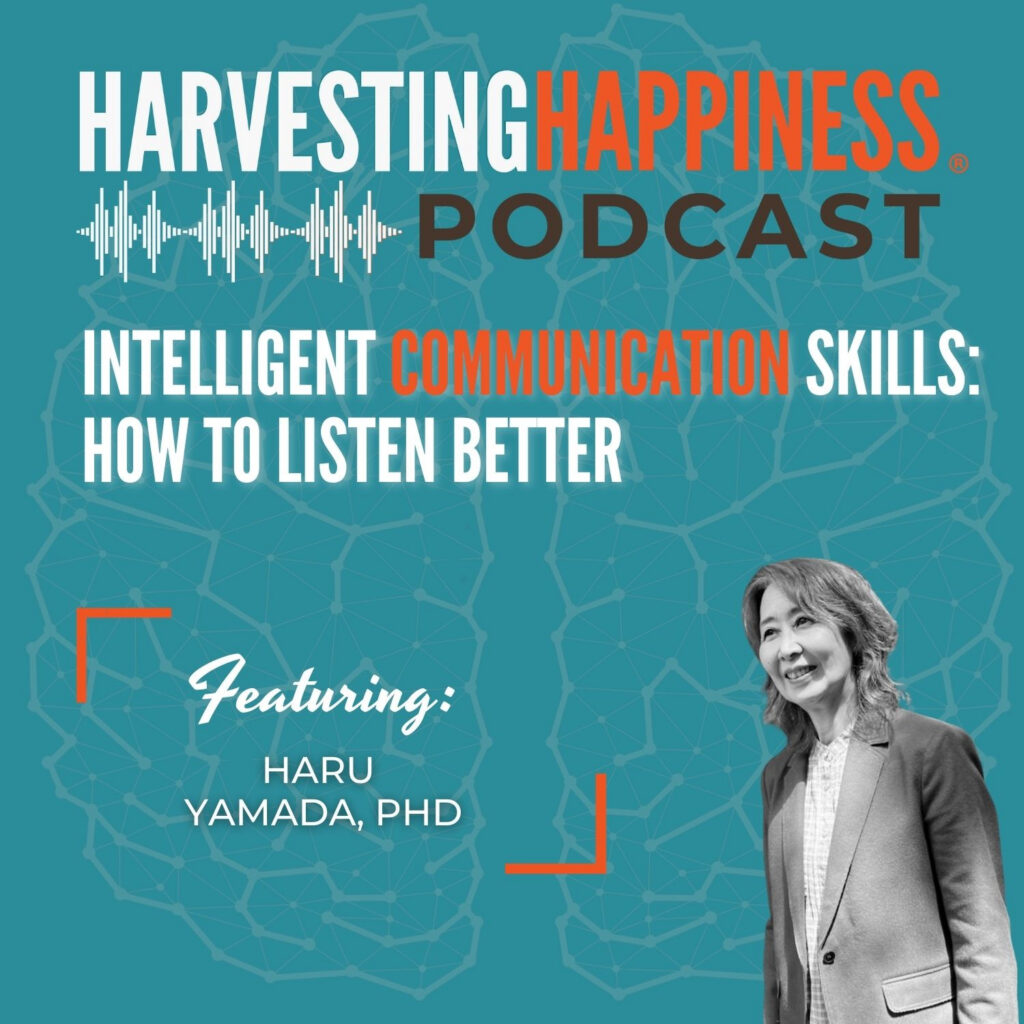
Haru Yamada, PhD, is a sociolinguistics researcher and a writer with a PhD from Georgetown University. With a wealth of global experience from growing up moving countries, Haru’s life mission is to champion listening to demonstrate how our listening intelligence is also a health benefit that gifts us the capacity to show up for others and ourselves. She lives in London with her French partner in a multicultural family where listening is key!
Book: Kiku: The Japanese Art of Good Listening
Keep Reading:

Lisa Cypers Kamen is a lifestyle management consultant who explores the art and science of happiness in her work as a speaker, author, and happiness expert. Through her globally syndicated positive psychology podcast, books, media appearances, and documentary film, Kamen has impacted millions of people around the world.
About The Author
learn more
browse services